Understanding the value of a rural property
A house, a barn and a garden form a distinctive whole. Understanding how each space is used is the first step towards assessing its value.
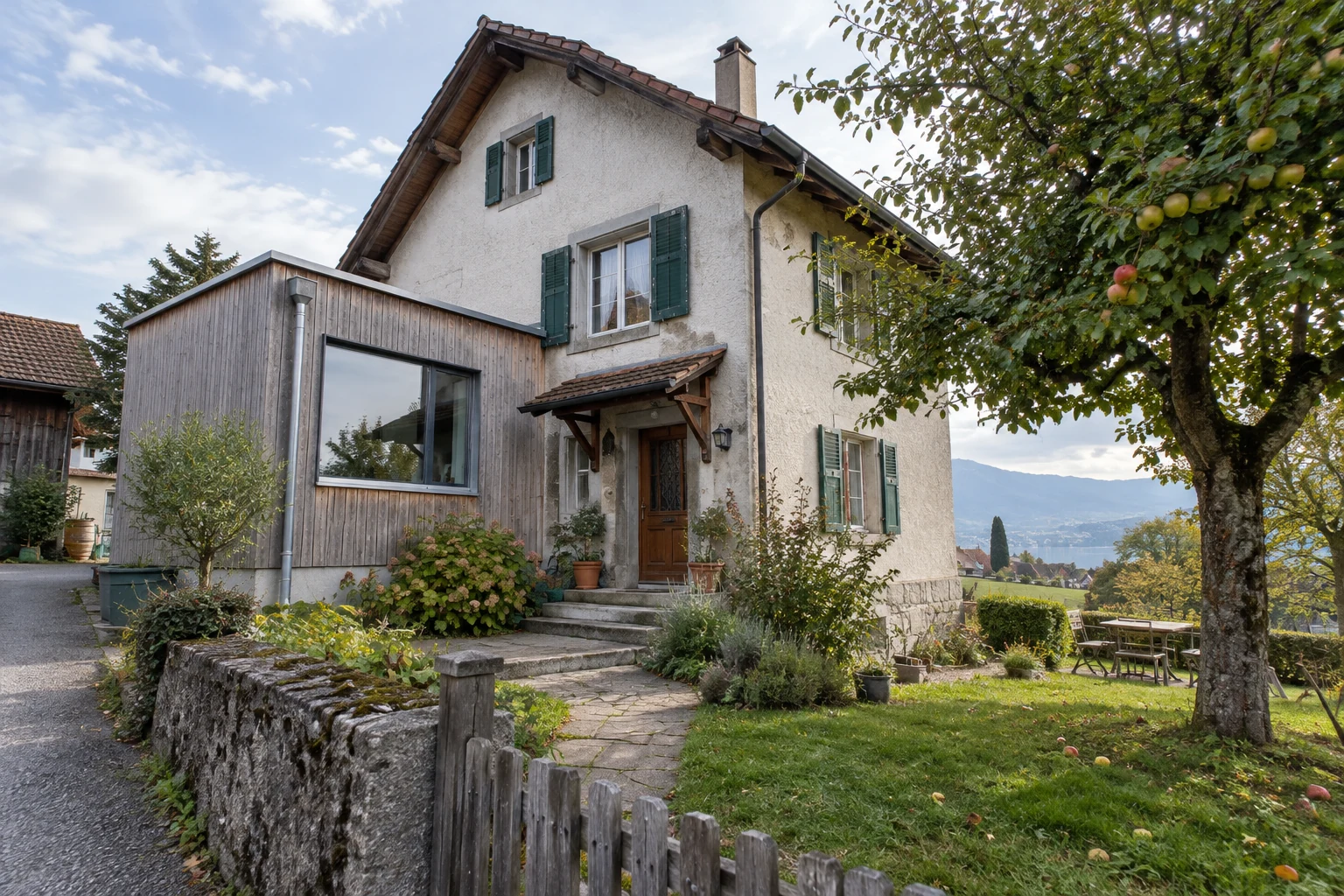
Identify buildings and plots
List the home, barn, shelters and outdoor areas. Distinguish documented measurements from areas to confirm. A photograph shows one aspect of the place, not the legal extent of the property.
Document possible uses
An existing building cannot necessarily become a home. Check municipal information, public restrictions and, where necessary, rural land law authorities. Potential must be supported by verifiable evidence.
Assess the whole with the right approach
The condition, use, access and restrictions of each plot need separate consideration. Scope is agreed before work starts so bare land is not confused with a house and its outbuildings.
An old farmhouse can make room for new plans.
Living space, a barn and a garden: an old farmhouse offers possibilities within legal and technical constraints.
In Vaud, a grade 3 listing indicates local heritage interest. It does not automatically prohibit façade changes or allow unrestricted interior alterations. The project must preserve the building’s qualities. Creating apartments requires checking zoning, protection, structure, light, access and permits. Outside building zones, cantonal authorisation is generally required.
The garden, old walls and outbuildings also form part of the project. Their heritage interest and use should be reviewed with the municipality and relevant specialists.
Explore my rural propertyUnderstand with official sources
Sources accessed on 13 October 2026. Vaud examples must be checked for the relevant canton, municipality and plot.